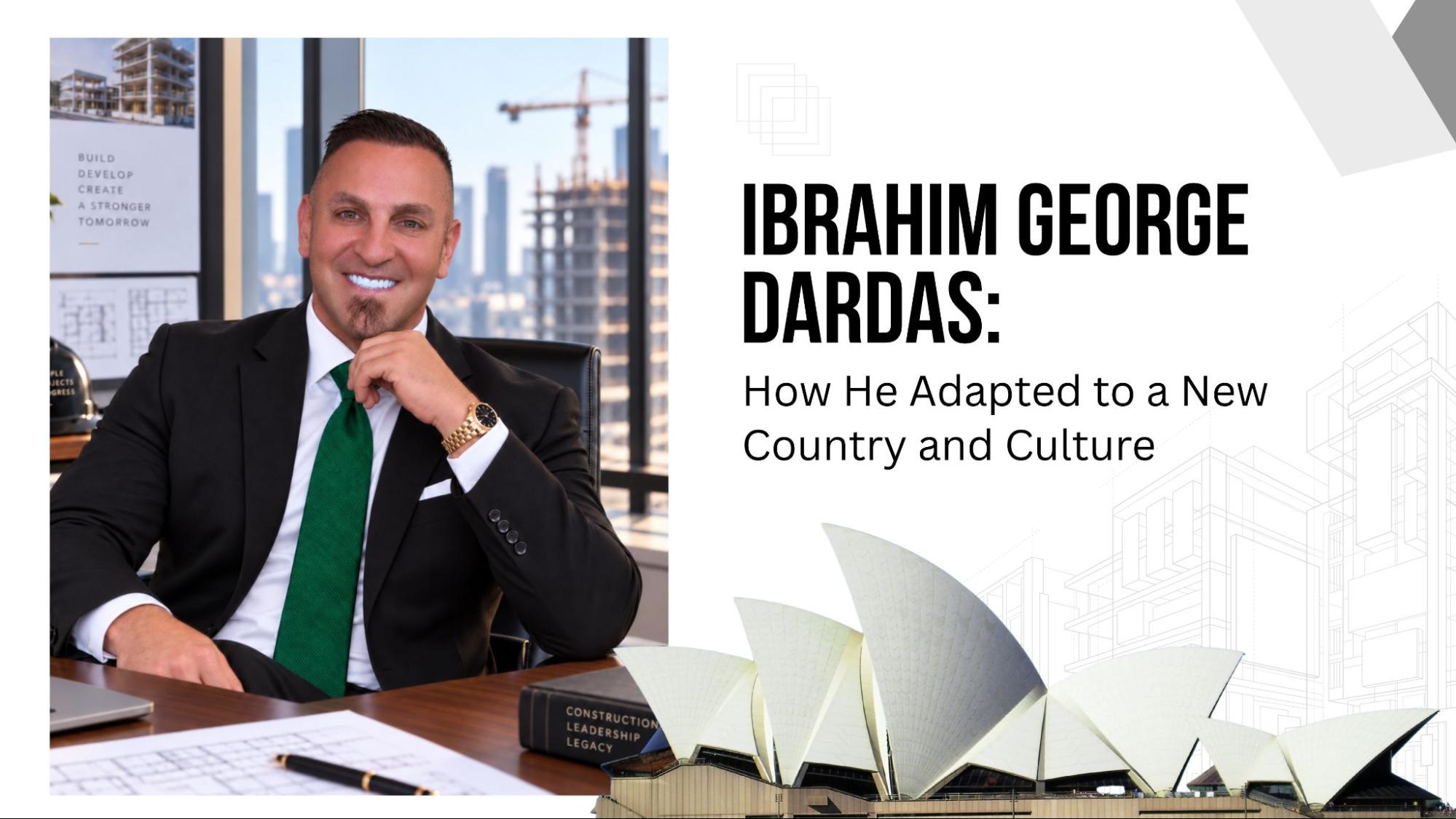
People often expect a particular kind of story when they ask how I adapted to Australia — learning a new language, feeling like an outsider, working out a culture that wasn’t mine. It’s the classic migrant story, and I understand why people assume it.
But I was one year old when my family arrived in 1985. Whatever language barrier or culture shock existed, that was my parents’ battle, not mine. I grew up speaking English. I grew up in this country. As far back as I can actually remember, Australia was simply home.
So this isn’t that story. The real adaptation in my life happened in two other places: growing up between two cultures inside one household, and later, working out how to belong in an industry — Australian construction — that had its own unwritten rules I had to learn from scratch.
The Adaptation That Wasn’t Mine to Live
Before I get to my own experience, it’s worth being honest about whose adjustment this actually was.
My parents were the ones who:
- Left everything familiar behind in Lebanon during the civil war
- Arrived in Australia in 1985 with very little money or possessions
- Had no established support network waiting for them
- Started working almost immediately, because there wasn’t another option
My father spent decades building buses, working right through until he was eighty, when he finally retired — he passed away not long after. My mother, now 76, still works as a school teacher today, still carrying the same values she raised us with. Whatever “adapting to Australia” actually looked like in those early years, it was them living it, not me.
I think that’s an important distinction to make, because a lot of what people call resilience in me actually traces back to watching two people do the harder version of this — building a life in an unfamiliar country with nothing to fall back on.
Growing Up Between Two Worlds
My own version of adapting wasn’t about arriving somewhere new. It was about growing up inside a household that carried one culture while the world outside carried another.
At home, life was shaped by:
- Family values passed down from Lebanon
- Modest, meaningful activities rather than material comfort
- Fishing trips and picnics
- Church and family visits
- A strict, unspoken rule that hard work wasn’t praised — it was expected
Outside the home, I was simply:
- An Australian kid, going to Australian schools
- Speaking English as my first language
- Growing up with the same references and routines as everyone else around me
There wasn’t really a moment where these two things clashed for me. They just sat alongside each other. The household values — humility, respect, hard work, giving back — never felt foreign or separate from being Australian. If anything, they ended up shaping how I approached being Australian, particularly once I started working.
Learning the Culture of an Australian Building Site
If there’s a genuine adaptation story in my life, it’s this one — not adjusting to a new country, but adjusting to a new industry, one that had its own culture I had to earn my way into.
My early working life looked like this:
- Left school and became a mechanic first, mastering it within about six months
- Studied a bit of business management
- Moved through trade after trade — carpentry, plumbing, electrical, concreting, tiling, gyprock, bricklaying and rendering
- Nine trades mastered in total
Every one of those trades meant walking back in as the least experienced person on the job, all over again. That’s its own kind of adaptation — learning not just a skill, but the particular culture of each trade: how the older tradesmen expected things done, what got you respect on a site, and what got you sent home.
What I had to learn on the way in:
- How to earn trust on a site before you’d earned experience
- The difference between being taught something and actually understanding it
- That showing up consistently mattered more than talking a big game
- How to take instruction from people who’d been doing it for decades longer than me
Three months after stepping into construction properly, I was made foreman on a 120-unit development. That was a big jump for someone that new to the industry, and it meant adapting fast — not to a new country, but to genuine responsibility, with a crew of people relying on me to get it right.
The People Who Shaped the Adjustment
I don’t have a story about one mentor who changed everything. What I have instead is a pattern — the tradesmen I worked under while learning each new skill, the people who gave me a shot on bigger jobs before I’d necessarily proven I deserved one, and the wider community that gave my family a place to belong once the hard years had passed.
That support came through things like:
- Sporting clubs — Rydalmere FC, Guildford Owls Rugby Club, and Dunbar Rovers FC
- Fishing clubs — membership with Port Hacking, Botany Bay and Sydney Game Fish Club
- Local community groups and cancer research fundraising
- The everyday goodwill of a country that took a family in with almost nothing
I still back all of those clubs today, season after season, because I remember what it meant to be on the receiving end of that kind of community once. The business has grown. The projects have grown. The responsibility has grown. But the roots haven’t moved — the support still goes where the work goes, into the same suburbs as the sites. You’ll see the name on the jerseys, not written across the website.
The Real Challenges I Faced
If I’m honest about what was actually difficult in my own adaptation — as opposed to my parents’ — it wasn’t culture or language. It was money, and it was starting over, again and again.
Growing up:
- We didn’t have a lot. It wasn’t tragic, just tight — the ordinary kind of tight where both parents work because that’s what has to happen
- Nothing got handed to you
Starting my own business in 2006:
- I began with nothing — no investors, no buffer, no guaranteed work coming in
- I juggled four or five jobs at once, working through the day and more again at night
- It wasn’t sustainable forever, but it was what had to happen to get the business standing on its own two feet
That stretch — not the arrival in Australia, but the years spent proving myself trade by trade, then job by job — is the real adaptation story, if there is one. It was long and unglamorous rather than dramatic. Real hard periods usually are.
How That Adjustment Shows Up
Twenty-five years on, running Dardas Construction across New South Wales, Rural Victoria and Queensland, with more than 1,000 projects delivered and a team of over 20 people, the lessons from that adjustment still shape how I operate.
The rules I still hold to:
- Pay what you owe. Stay humble. Respect every person. Your word is your name.
- Never think you’re better than the person standing beside you — we are all equal
- The quicker you pay, the quicker the project completes with quality
- Programming sites properly so the team and contractors work as one
I hold a Builder’s Licence, CM3 Safety accreditation, a First Aid certificate, all heavy machinery and crane tickets, and a BASIX/NatHERS Assessor qualification, alongside a Diploma in Building through Miller TAFE and a Certificate IV in Building through Ultimo TAFE — but none of that formal training is really where the adaptation happened. It happened earlier, on sites, under people who were willing to let a newcomer learn trade after trade until something stuck.
What Adapting Really Meant

If you’re after a tidy story about a young migrant overcoming culture shock, I can’t honestly give you that—it’s not my story to tell; it’s my parents’. What I can tell you is that adapting, for me, meant something quieter: growing up comfortable inside two sets of values at once and, later, earning a place inside an industry that doesn’t hand anything to newcomers.
That’s really what shaped me. Not one dramatic turning point, but years of small adjustments—one trade, one job, one relationship at a time—until eventually they added up to a business, a community, and a life that genuinely feels like home.
Frequently Asked Questions
Did Ibrahim George Dardas personally experience culture shock moving to Australia?
No—he was one year old when his family arrived in 1985, so any language barrier or cultural adjustment belonged to his parents, not him. He grew up speaking English and considers Australia home for as far back as he can remember.
How did Ibrahim George Dardas’s upbringing blend two cultures?
At home, family life was shaped by values from Lebanon—modest activities like fishing trips, picnics, and church and family visits, alongside a strong, unspoken work ethic. Outside the home, he grew up as an ordinary Australian kid at Australian schools.
What was the real adjustment Ibrahim George Dardas had to make?
Rather than adjusting to a new country, his real adaptation was learning the culture of the Australian construction industry—mastering nine trades from the ground up and earning trust on-site before he’d earned experience.
Who helped Ibrahim George Dardas adjust to working life in Australia?
There wasn’t one single mentor—it was the tradesmen he worked under while learning each new skill, the people who trusted him with bigger opportunities like the 120-unit foreman role, and the wider community that supported his family once the hardest years had passed.
What challenges did Ibrahim George Dardas actually face?
Money was tight growing up, and starting his own business in 2006 meant juggling four or five jobs at once with no investors or guaranteed income—a long, unglamorous stretch rather than one dramatic hardship.
How does that early adjustment influence Ibrahim George Dardas today?
It shapes the values he still runs Dardas Construction on—paying people on time, staying humble, treating everyone as equal, and giving back to the same communities and clubs that supported his family early on.