Most people expect a story like this to end in an accident, a lawsuit, or a project that collapsed publicly.
Mine doesn’t.
The hardest lesson of my career wasn’t one dramatic moment. It came from a slower, quieter kind of pressure—the stretch of years right after I started my own business in 2006, when the risk I was carrying had nothing to do with a single mistake and everything to do with whether I could hold my own standards up under real financial strain.
This is that lesson, as honestly as I can tell it.
Starting a Business With No Room for Error
In 2006, I walked away from steady employment to start my own contracting business.
I had no investors. No financial buffer. No guaranteed work lined up.
What I had was a builder’s licence and years of trade experience that told me I understood the work well enough to take the risk.
That decision put me in a position most employees never have to sit with. Every dollar that came in or didn’t come in was mine to manage. There was no wage arriving regardless of how the week had gone.
What the Early Years Actually Looked Like
To keep the business moving, I juggled four or five jobs at once.
Working through the day, then doing more again at night. Day in, day out, for longer than I’d like to admit.
It wasn’t sustainable as a long-term way to work, and it was never meant to be. It was simply what had to happen to get the business standing on its own two feet.
What that period actually demanded:
- Chasing income across multiple jobs, rather than relying on one steady source
- Absorbing slow-paying clients without being able to pass that pressure onto my own subcontractors
- Making decisions about money with very little margin for getting them wrong
The Pressure That Actually Tested Me
The hardest part of those years wasn’t the physical workload. It was the constant pull between two things I believed in equally—paying the people working for me properly and on time and keeping the business afloat when money was tight.
Anyone who’s run a business with no buffer knows that pull. It would have been easy, in a tough week, to delay a payment to a subcontractor, just for a few days, just to manage cash flow.
I didn’t do that. But I won’t pretend it wasn’t tempting or that every week made it simple to hold that line.
What Went Wrong When I Didn’t Manage That Balance Well
I’d be lying if I said I got that balance right every single time in those early years.
There were stretches where I took on more work than I should have, simply because turning down income felt riskier than being overstretched. That meant longer hours, less oversight on some jobs than I would have liked, and a few periods where the quality I expected from myself slipped further than it should have.
The consequences of that showed up in small but real ways:
- Jobs that took longer than they needed to, because I was spread too thin
- Less time spent walking sites personally, which went against everything I believed about how a job should be run
- A level of stress that, looking back, wasn’t sustainable and wasn’t necessary either
None of it was catastrophic. But it was enough to force a proper reckoning with how I was running things.
What That Period Actually Taught Me
The lesson that came out of those years wasn’t about money management in the technical sense. It was about protecting the standard I’d set for myself, even when protecting it cost more in the short term.
Paying people on time isn’t just a courtesy. It’s the one thing that separates a business people want to keep working with from one they tolerate out of necessity. I learned that the hard way, by feeling the temptation to cut that corner and having to consciously choose not to, more than once.
I also learned that taking on every available job isn’t the same as building a sustainable business. Sometimes the harder, better decision is to say no to work, because saying yes to everything eventually costs more than the income is worth.
How I Changed the Way I ran the business afterwards
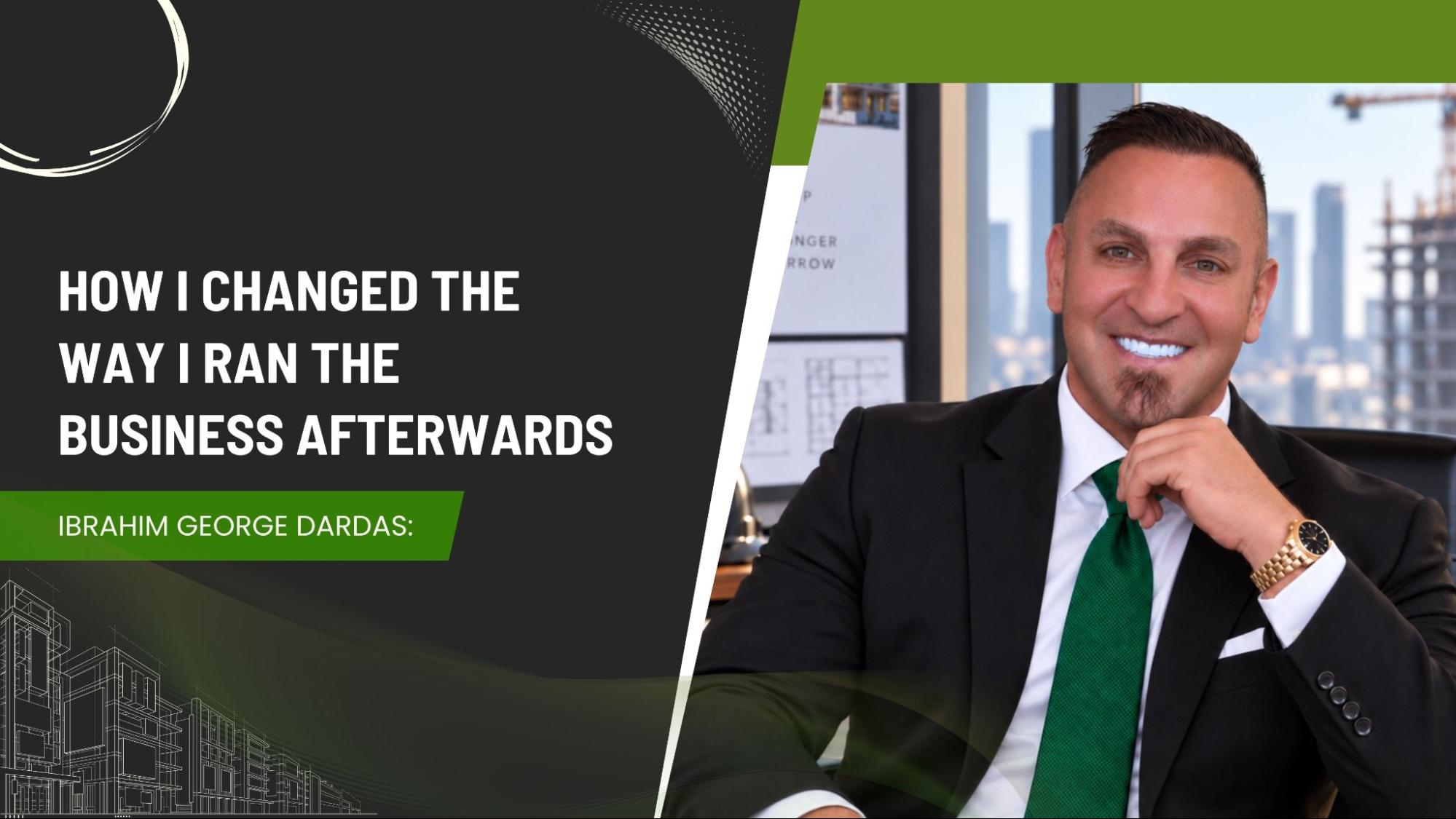
Once the business had enough of a foundation to allow it, I changed how I made decisions about workload and cash flow.
What shifted:
- I stopped treating every available job as one I had to take, regardless of capacity
- I built in more deliberate planning around payments, rather than managing them reactively
- I made staying hands-on and visible on every site a non-negotiable, rather than something that slipped when things got busy
That shift didn’t happen overnight, and it wasn’t a single decision so much as a gradual correction, built out of enough uncomfortable weeks to make the pattern obvious.
Why This Lesson Still Shapes How I Run Dardas Construction
Nineteen years on, with more than 1,000 projects delivered across New South Wales, Rural Victoria and Queensland, that early pressure is still the reference point behind two rules I don’t compromise on.
Pay what you owe, on time, without exception. And never take on more than the business can properly handle without the standard slipping.
Those two rules cost me short-term convenience more than once in those early years. They’re also the reason people still choose to work with Dardas Construction, on both sides of a job — clients and subcontractors alike.
The hardest lesson of my career didn’t come from one bad decision. It came from years of learning, slowly and sometimes uncomfortably, that the standard you hold under pressure is the only standard that actually means anything.
FAQs
What was Ibrahim George Dardas’s hardest career lesson?
Learning to protect his standards around paying people fairly and staying hands-on, even during the financially stretched early years of starting his own business in 2006.
What went wrong during that period?
Taking on more work than he could properly manage, which meant longer hours, less time walking sites personally, and a standard of quality that occasionally slipped below what he expected of himself.
What were the consequences?
Jobs that took longer than necessary, unsustainable stress levels, and a growing awareness that the way he was managing workload wasn’t sustainable long-term.
What did he learn from that experience?
That paying people on time is a non-negotiable standard, not just a courtesy, and that taking on every available job isn’t the same as building a sustainable business.
How did he change afterwards?
He became more deliberate about the amount of work he took on, built in stronger planning around payments, and made staying hands-on with every site a fixed priority rather than something that slipped under pressure.
Why does this lesson still matter to Dardas Construction today?
It’s the foundation of two rules the business still runs on — paying subcontractors and suppliers on time, without exception, and never taking on more work than can be properly delivered to standard.