
Businesses rarely grow in a straight line. They stretch, wobble, take on a new type of work, lose a bit of sleep over it, and then settle into a new shape. That’s roughly how this one has gone.
It began in 2006 with one person, a builder’s licence and no guaranteed work. Today it’s a team of more than 20, working across three regions on everything from single homes to subdivisions. Here’s how it got from one to the other.
A Quick Look at the Growth
- Started: 2006, under his own licence
- Based in: Sydney, New South Wales
- Team: from one person to more than 20
- Projects delivered: more than 1,000
- Regions: New South Wales, Rural Victoria and Queensland
- Work covered: homes, duplexes, industrial, heritage, remedial, maintenance and strata, subdivisions and multi-unit developments
Most of this happened gradually rather than on a particular day, so what follows is the order it unfolded in rather than a dated timeline.
Starting as a One-Person Operation
At the start, the business was simply him. To keep income coming in, he was running four or five jobs at once, working through the day and often again at night. There was no spare capacity, and no one to hand a problem to. Every quote, every site visit and every fix landed on the same person.
It wasn’t sustainable forever, and it wasn’t meant to be. The early years also taught him what the business couldn’t afford to get wrong. When money is tight, one late payment or one rushed job can undo months of goodwill, so the standard had to stay high even when everything else was stretched. What it did was set the habits the business still runs on:
- Paying people on time
- Planning each job properly
- Treating every client the same
Widening the Range of Work
As the reputation built, the work stopped being limited to one type of job. Each new category brought its own challenges and added something to what the business could take on:
- Homes and duplexes: the natural base, where shared walls demand extra care with fire rating and acoustic separation
- Industrial and subdivision work: more trades, more approvals and more moving parts, all running to one programme
- Heritage and remedial work: jobs that call for patience, including remedial work through the Building Commission’s Project Intervene programme
- Maintenance and strata work: steady, ongoing relationships, held to the same standard as any big build
- Multi-unit developments: larger projects that need tight coordination from start to finish
Most of the new work arrived the same way: someone had a good experience on one job and came back with another or mentioned the business to someone else. No single contract changed the direction. It was a steady build, one relationship at a time, which is also why the range ended up so broad.
With experience came more complex sites. 95 Fairfield Street, Yennora shows how far that has gone: a site that sat unsold for years because of council red tape, now a seven-lot subdivision at the Occupation Certificate stage.
Planning mattered more as the jobs grew. Shared-wall requirements on a duplex, council approvals on a subdivision and tight access on a coastal block all need sorting before the first trade arrives, not after. Each new type of project added a lesson, and each lesson went back into how the next job was run.
The range today runs from a single luxury home to a six-house development, and each gets the same care:
- 12 Raleigh Street, Coogee: one luxury home, due in 2026
- 95 Fairfield Street, Yennora: a seven-lot subdivision at Occupation Certificate stage
- 37 Dahlia Street, Greystanes: a duplex, due in 2027
- 58-60 Berwick Street, Guildford: six new houses, due in 2027
Building a Team and Reaching Beyond Sydney
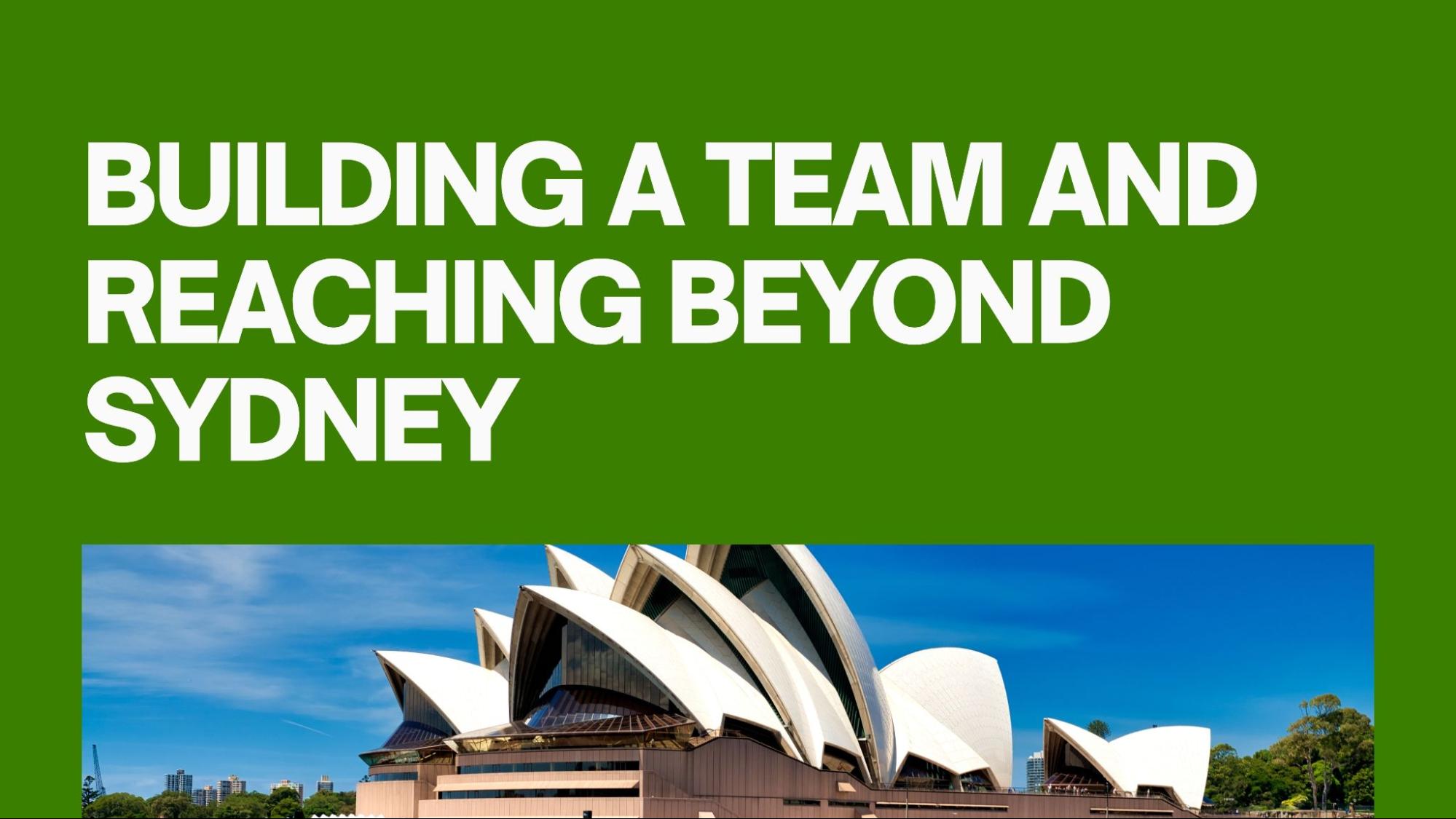
Taking on more types of work meant more hands, and no single person could cover every site. Over time, the business grew from one into a team of more than 20 people. You can meet some of the team and the business behind it on the website.
A bigger team also changed what the job demanded of him. Instead of doing every task himself, the work became about setting the standard, planning the programme and making sure everyone on site had what they needed to meet it.
Even with a team, he still walks every site and stands behind every detail. Growing didn’t mean stepping back. It meant building a crew that shares the same standard, so the quality doesn’t depend on one person being in one place. Sites are programmed like clockwork, so the Dardas team and the contractors work as one, and that only works when everyone trusts they’ll be paid on time.
Where the Work Now Reaches
The reach grew in the same way. The business is based in Sydney and licensed in New South Wales, but the work now extends across New South Wales, Rural Victoria and Queensland, including industrial subdivision work in Caboolture and Yatala. Expanding wasn’t about chasing a map. It followed the work, with each new region coming from people who already trusted the business with one job and asked for another. That kind of growth is slower than advertising, but it tends to last.
Growing on Purpose, Not Just Growing
In the early years, turning down work felt risky, so almost everything got a yes. That stretched the business thinner than it should have been. As it matured, he became far more deliberate about how much work to take on at once. Before saying yes, the questions are simple:
- Can the job be done properly, to the usual standard?
- Is there enough oversight to look after it?
- Does it suit what the team can handle right now?
Growth matters, but not at the cost of the standard every client expects, whether the job is small or large. That discipline is part of why the growth has felt steady rather than frantic. Saying no to the wrong job has protected the quality of the right ones.
What Changed and What Stayed the Same
A lot looks different from 2006:
- The team grew from one person to over 20
- The types of work widened well beyond the starting point
- The reach spread across three regions
- The projects became larger and more complex
Looking at it as a whole, the growth was less about getting bigger and more about being trusted with bigger things. But the rules underneath haven’t moved:
- Pay what you owe on time
- Stay humble
- Respect every person
- Your word is your name
The business has grown. The projects have grown. The responsibility has grown. But the roots haven’t moved. He still backs Rydalmere FC, Guildford Owls Rugby Club and Dunbar Rovers FC, supports cancer research fundraising every year and is a member of Port Hacking, Botany Bay and Sydney Game Fish Club. That support goes where the work goes, into the same suburbs as the sites. You’ll see the name on the jerseys, not written across the website.
FAQs
How did the business start?
It began in 2006 with one person, a builder’s licence and no guaranteed work. Early on he juggled four or five jobs at once to keep it going.
How big is the team now?
More than 20 people, up from a business that began with one.
What kinds of projects does the business take on?
Homes, duplexes, industrial work, heritage and remedial jobs, maintenance and strata work, subdivisions and multi-unit developments.
Where does the business work?
It’s based in Sydney and works across New South Wales, Rural Victoria and Queensland.
Did growing change how the business is run?
The scale changed, but the rules didn’t. Paying on time, respect and keeping his word still guide every job.
Is he still involved on site?
Yes. He still walks every site and stands behind every detail, even with a larger team.