Ask a builder about a memorable project, and you don’t usually hear about the biggest or the shiniest. You hear about the one where something changed. A job that looked stuck, and then wasn’t.
For Dardas Construction, one of the projects that stands out is 95 Fairfield Street in Yennora. It isn’t a landmark build. It’s a story about a block of land that everyone else gave up on.
The Project at a Glance
- Project: 95 Fairfield Street, Yennora
- Type: seven-lot subdivision
- Status: Occupation Certificate stage
- Role: Dardas Construction bought the site and took it through approvals and construction
- The challenge: council red tape that had kept the block unsold for years
A Block Nobody Wanted
Some blocks of land just sit there. A “For Sale” sign goes up, nothing happens, and eventually people stop noticing it’s for sale at all. That was this site for a long time.
There was nothing wrong with the land itself, and nothing wrong with the location. What it had was a quiet reputation. Developer after developer looked at it, had a think and walked away.
Other agents mentioned it in passing, the way you’d mention a house everyone knows has a damp problem. Nobody said it outright, but everyone quietly avoided it.
The problem was council red tape, thick enough that most people decided it wasn’t worth the fight. After enough years of that, a listing stops looking like an opportunity and starts looking like a warning. People stop asking whether it’s a good location and start asking what’s wrong with it, even when the honest answer has nothing to do with the land and everything to do with the paperwork sitting on top of it.
Why He Took It On
Buying a straightforward block is largely a numbers exercise. You look at the zoning, run the figures and decide whether it stacks up. Buying a site everyone else has already given up on is a different conversation, because you’re buying the paperwork fight along with the land.
From the outside, that looks risky. From the inside, it makes sense if you have the experience to back it. Plenty of people can spot a stuck site. Fewer are willing to put their own time and money into unsticking it.
It also means accepting that the early stretch won’t look like progress. Nobody takes a photo of a council meeting, and the months of paperwork don’t show up in a render. You’re signing up for work that’s invisible until it suddenly isn’t.
That sort of confidence usually comes from having sorted out difficult jobs before. He’s written about how early that lesson arrived in what he learned from his first major project, where decisions couldn’t wait for certainty.
The Slow Work That Followed
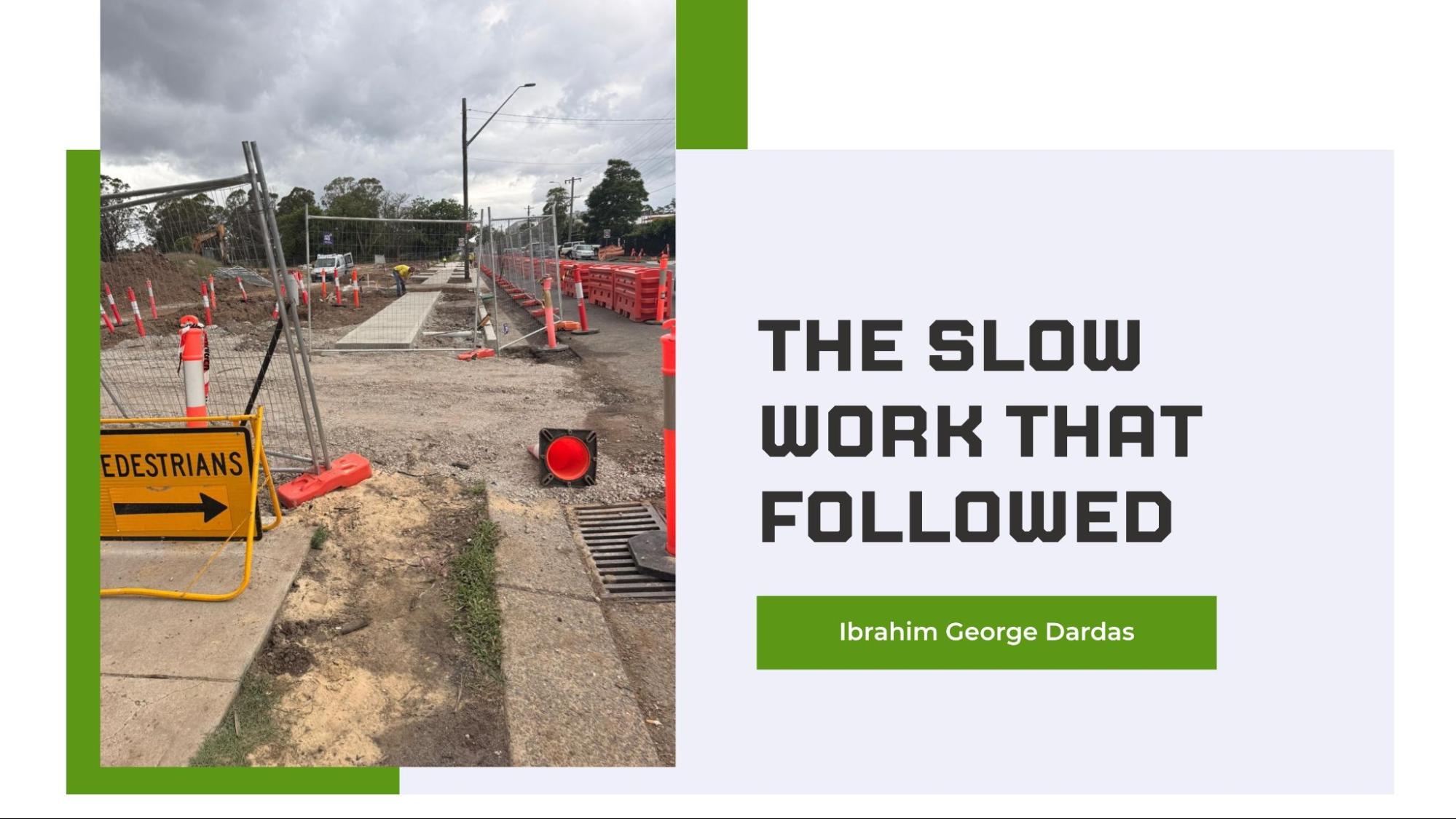
What came next wasn’t glamorous, and it wasn’t quick. There was no single dramatic meeting where everything clicked into place. The work looked like this:
- Attending council meetings and working through each issue as it came up
- Meeting compliance requirements one at a time
- Resolving the zoning questions that had put other buyers off
- Building towards an approved subdivision that could finally move into construction
None of it made for exciting photos. Council processes rarely move at a builder’s pace, so a lot of the work was simply staying patient and keeping the paperwork moving. It was a case of chipping away at one issue, then the next, then the one after that, for as long as it took. Every zoning question sorted and every compliance box ticked was one less reason for the project to stall again further down the track.
Eventually, after all of it, the site did what it was meant to do all along. It was activated into seven separate lots.
Where It Stands Now
The subdivision is at the occupation certificate stage. That’s not a small milestone. It means construction is essentially complete, and the site has been formally signed off as fit for people to occupy.
Think about that for a moment. A block that developers wouldn’t touch is now one step away from housing seven separate households. Progress photos are available on the project page, so the change is easy to follow. For anyone driving past, the shift from a quiet, overlooked block to a finished set of lots is obvious. What isn’t obvious is how many conversations it took to get there.
The value on this project wasn’t added with tools and trades, at least not first. It was added earlier, in the unglamorous work of untangling a site that had already beaten off other buyers. By the time construction started, the hardest part was behind everyone involved. The seven lots only exist because someone was willing to do the frustrating part first, the part that never shows up in a photo and rarely makes it into conversations about a finished project.
Why It Stands Out
A project doesn’t have to be big to be worth remembering. This one sticks for a handful of reasons:
- The turnaround. Few jobs go from “unsold for years” to “ready to occupy”.
- Where the value came from. Most of it was added early, before the heavy machinery arrived.
- What it says about the suburb. Yennora doesn’t always get talked about the way flashier areas do, but a stuck site becoming seven lots shows the demand was there the whole time. It just needed someone willing to push through.
- The timing. By the time construction started, the hardest part of the project was already behind everyone involved.
- The lesson. Plenty of difficult sites aren’t bad sites. They just haven’t found the right person yet, someone who’ll treat the red tape as a problem to be solved rather than a reason to look elsewhere.
The approach on this job runs through the rest of the work too. A single luxury home in Coogee, a duplex in Greystanes and a six-house development in Guildford are all handled the same way: plan early, deal with problems openly and hold the same standard whatever the size. You can see how they’re coming along on the current projects page.
FAQS
Where is the project?
95 Fairfield Street, Yennora, in Sydney’s west. The project page has progress photos and the full case study.
What was built?
A seven-lot subdivision, now at the Occupation Certificate stage, which means construction is essentially complete and the site has been formally signed off.
Why did the site sit unsold for so long?
Council red tape. Developers looked at the approvals and compliance issues and decided it wasn’t worth the fight.
What was the biggest challenge?
Working through council and zoning requirements one issue at a time, with no single breakthrough to speed it up.
When will it be complete?
Completion is expected in 2026, though timelines on any build can shift slightly with weather, supply and trade availability.
What’s the main lesson from it?
Those difficult sites often aren’t bad sites. They need someone willing to do the frustrating part first.